The Royal Festival Hall: the South Bank's big room
Post-war optimism in concrete and wood, and one of London's most reliably comfortable evenings.
The Bravura editorial team
Published 7 September 2026 · Last reviewed 7 September 2026 · How we research and review
If you have spent any time walking along the south bank of the Thames, you have encountered the Royal Festival Hall (RFH). It is the flagship of the Southbank Centre, a sprawling concrete complex that serves as London’s secular cathedral for the arts. Built for the 1951 Festival of Britain, the hall was intended as a 'tonic for the nation' after the austerity of the Second World War.
It remains a triumph of mid-century modernism. While the Victorian grandeur of the Royal Albert Hall or the gilt-edged elegance of international houses can feel exclusionary, the RFH feels democratic. It is a 'big room' in the best sense: airy, intelligible, and surprisingly intimate for a space that seats 2,500 people. For those new to classical music, it is perhaps the least intimidating major venue in Europe.
The character of the room
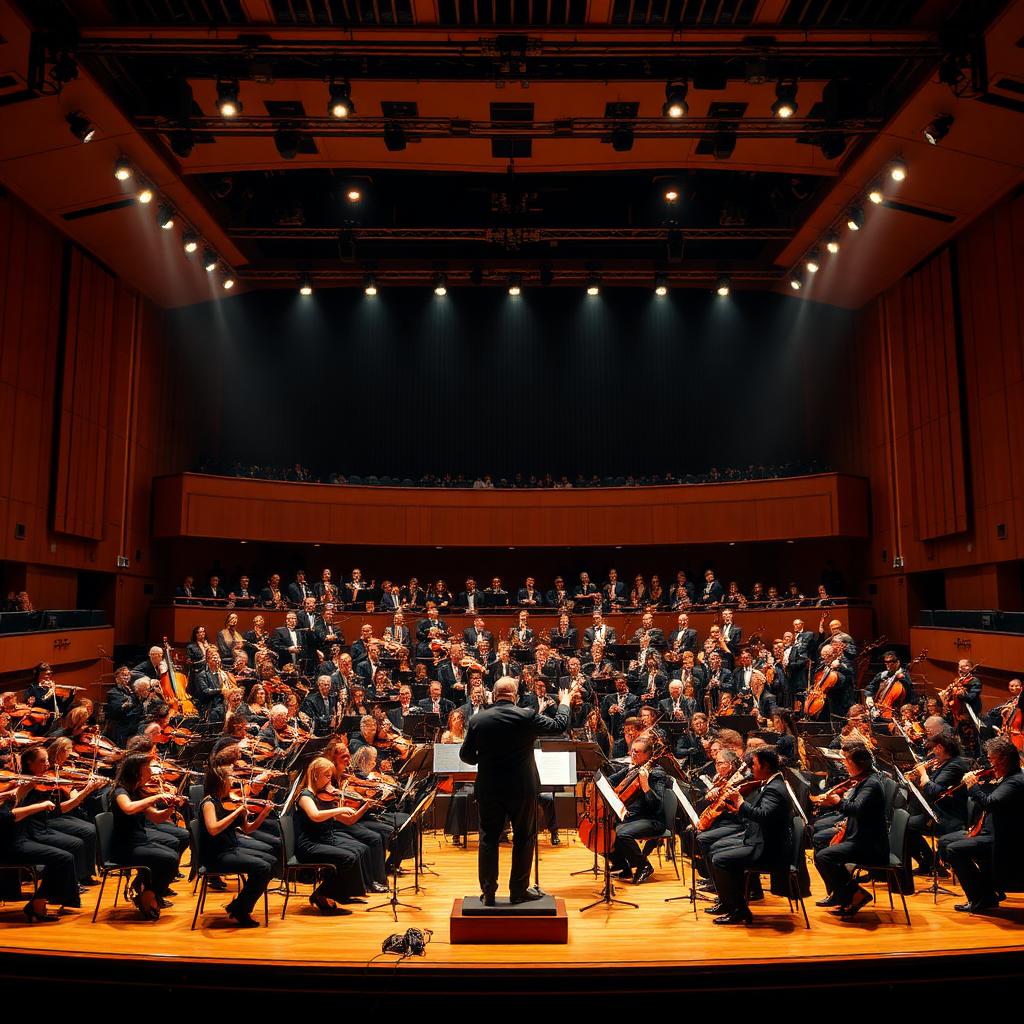
Inside, the RFH is a 'shoebox' design, though a very wide one. The aesthetic is all polished wood, brass, and vast windows that look out over the river. Unlike older halls, there are no pillars to hide behind and very few 'obstructed views'.
The acoustic is famously 'dry'. In the world of classical music, 'dry' means that sound does not linger or wash around the room; instead, it reaches your ears with clinical clarity. You can hear every individual instrument in an orchestral texture, which is excellent for complex modern works or the intricate clockwork of a Haydn symphony. The drawback is that it can be unforgiving. There is no golden haze to blur a tiny mistake or a poorly blended choir.
Where to sit: a tactical guide
The seating at the RFH is divided into the Stalls, the Boxes, and the Tiers. Because the hall was refurbished significantly in the mid-2000s, the sightlines are generally excellent everywhere, but the sound varies.
- The Stalls: These are the seats on the main floor. The back of the Stalls (Rows R–Z) often provides the best acoustic balance, as the sound has space to blend before it reaches you. The very front rows offer a thrilling view of the conductor’s sweat and the frantic bowing of the violins, but you may lose the overall 'picture' of the music.
- The Boxes: Running along the sides, these offer a 'side-on' view. They are excellent for watching a pianist’s hands or seeing how a percussionist manages five different instruments at once.
- The Tiers: The Terrace and Balcony offer the 'God’s eye view'. If you are watching a large-scale work like Britten’s War Requiem or a Mahler symphony, sitting high up allows you to appreciate the sheer scale of the forces involved.
- Choir Seats: Located behind the orchestra, these are often the cheapest tickets. You will be looking at the conductor’s face and the backs of the musicians. It is a fascinating perspective, though the brass section will be playing directly into your lap.
The resident heavyweights
The RFH is not a 'receiving house' that just rents out space; it is the home of several world-class ensembles. The London Philharmonic Orchestra (LPO) and the Philharmonia Orchestra are the primary residents.
The LPO, currently under the leadership of Edward Gardner, tends to tackle the big, meaty repertoire. Their programming often balances the core classics — think Beethoven, Brahms, and Tchaikovsky — with ambitious premieres. The Philharmonia, meanwhile, is known for its versatility and high-tech approach to audience engagement, often featuring conductors like Santtu-Matias Rouvali or Marin Alsop.
You will also frequently find the Royal Philharmonic Orchestra and the Orchestra of the Age of Enlightenment (who play on period instruments) on the bill. The sheer volume of activity is staggering; the Bravura diary currently lists over 40 upcoming performances at the hall, ranging from solo recitals to full-scale ballet and contemporary dance.
Practicalities: arrival and intervals
The Southbank Centre is a five-minute walk from Waterloo Station. If you are coming from the north side of the river, walking across the Hungerford Bridge offers one of the best views of London, though it is often buffeted by wind.
Unlike the strict 'black tie' culture of some opera houses, the RFH is very casual. You will see people in suits next to people in hiking boots. The foyers are vast and open to the public all day, making it a great place to sit with a book and have a coffee or a drink before a concert.
The Royal Festival Hall is London’s most egalitarian stage. It lacks the snobbery of the salon, preferring the honest clarity of wood and light.
Most evening concerts begin at 7:30 pm. We recommend arriving at least 30 minutes early. Not because of strict security queues, but because the foyers are part of the experience. The bars are numerous, though rarely cheap, and the outdoor terraces are the best place in the city to spend a summer interval.
Access and inclusion
Because it was built in the 1950s and renovated recently, the RFH is significantly more accessible than London’s older theatres. There are lifts to all levels, plenty of wheelchair positions with good sightlines, and internal ramps.
The Southbank Centre also frequently hosts 'Relaxed' performances and 'Discovery' days. For example, the LPO Junior Artists and events like the OrchLab Festival Day are designed to strip away the 'rules' of the concert hall, making the music accessible to those who might find a traditional two-hour silent sitting difficult.
Honest drawbacks
No venue is perfect. The RFH’s greatest strength — its clarity — can sometimes feel a little 'cold' compared to the warm, reverberant embrace of a hall like the Musikverein in Vienna or the Royal Albert Hall. If you are a fan of 'lush' orchestral sound, you might find the RFH a bit clinical.
Additionally, the sheer size of the building means it can feel a bit like an airport terminal during the interval. Finding your friends in a crowd of two thousand people across four levels of foyer requires coordination.
Pricing and booking
Tickets for orchestral concerts at the RFH are surprisingly varied in price. While top-tier seats for a star soloist can be expensive, the Bravura diary shows that the lowest advertised prices often start around £19.50, with a typical entry point of £20.
- Check for 'Series' discounts: If you book three or more LPO or Philharmonia concerts at once, the Southbank Centre often applies a discount.
- Young person schemes: If you are under 30 (or a student), both the LPO and Philharmonia have schemes that offer significantly cheaper tickets, often in the best parts of the house.
To see what is currently scheduled — from Shostakovich symphonies and Tchaikovsky concertos to world premieres by composers like Mark Simpson — visit the Bravura calendar. You can filter by venue to see the full breadth of what London’s 'big room' has to offer over the coming months. For more advice on attending your first concert, see our guides page.