The Barbican: how to hear the LSO at its best
A clear, close, unforgiving hall inside a concrete labyrinth. Both parts are worth understanding.
The Bravura editorial team
Published 7 September 2026 · Last reviewed 7 September 2026 · How we research and review
Built as the crown jewel of an uncompromising post-war housing estate, the Barbican is a concrete fortress dedicated to the arts. It is frequently voted both London’s most beloved and most hated building. For the classical listener, it is the primary home of the London Symphony Orchestra (LSO) and the BBC Symphony Orchestra.
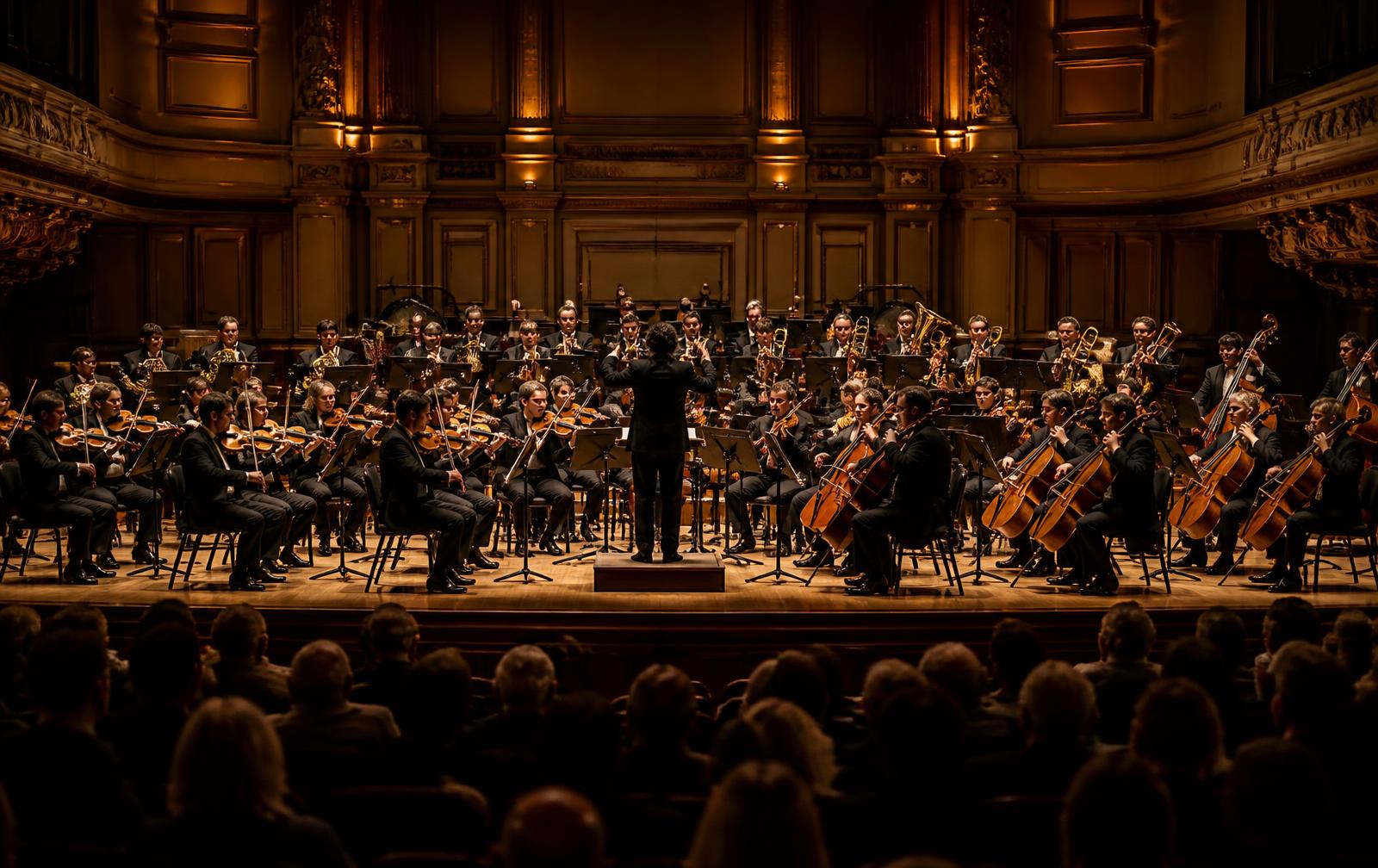
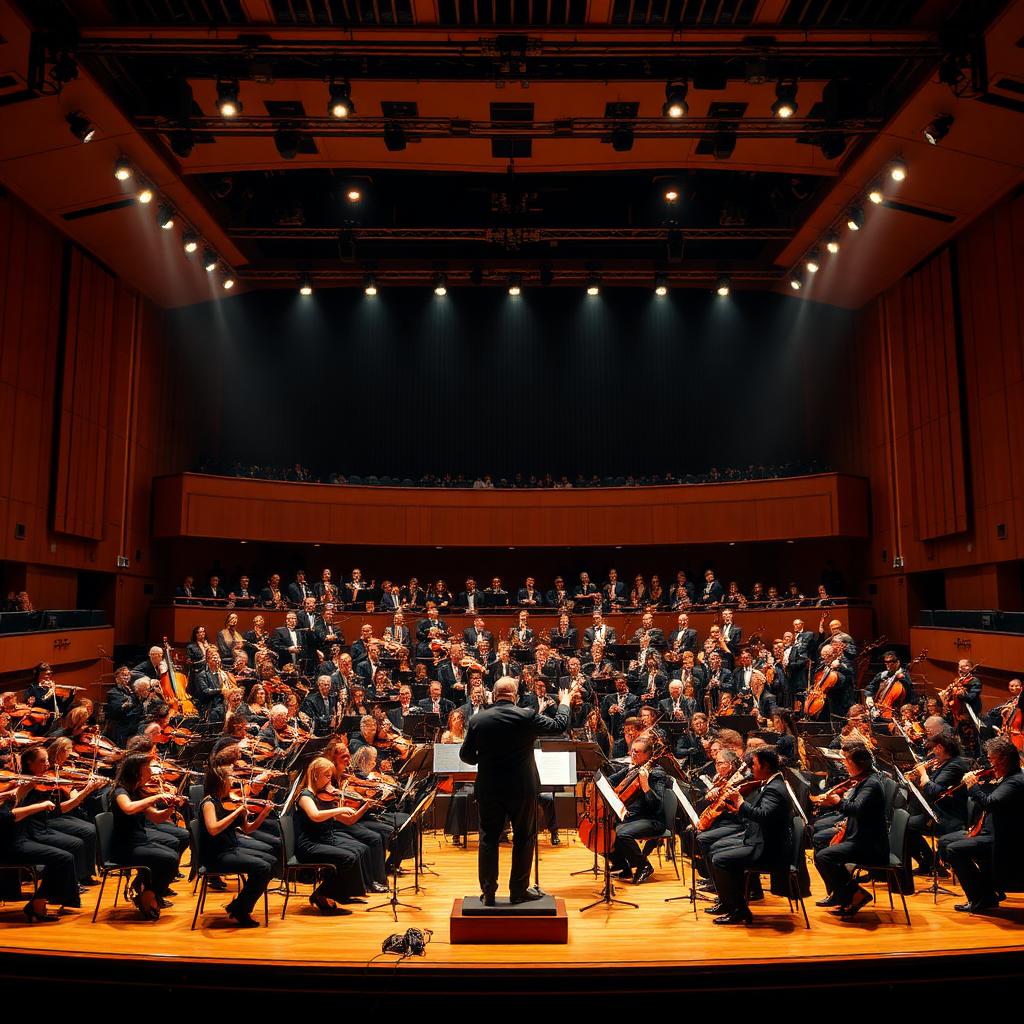
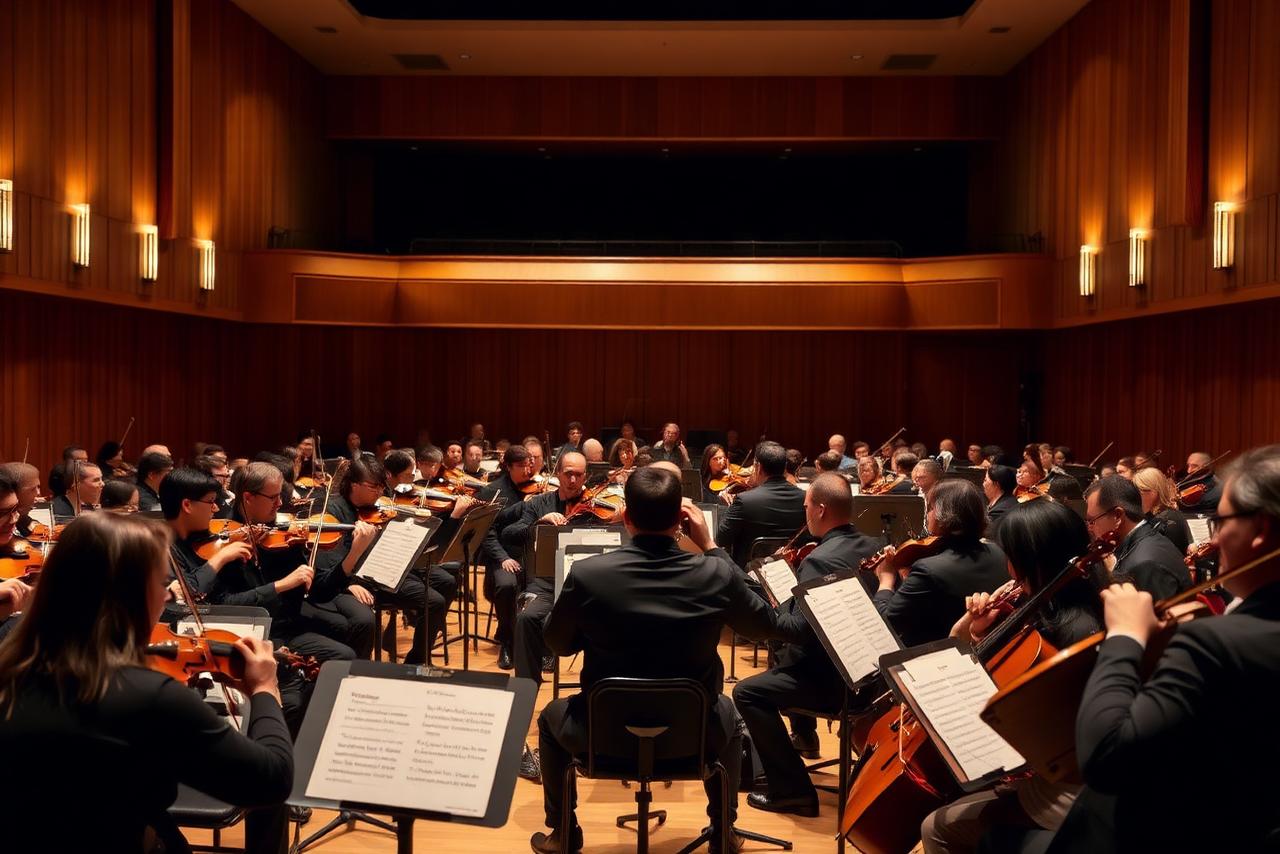
The Hall itself is a large, wood-panelled room that feels surprisingly intimate despite seating nearly 2,000 people. Unlike the cavernous, echoing dome of the Royal Albert Hall, the Barbican is a high-definition space. It is honest, often dry, and famously unforgiving to the performers on stage.
The Acoustic Signature
The Barbican Hall is often criticised for a lack of "bloom" — that lush, reverberant glow that carries sound in older, shoebox-shaped halls. However, for the modern listener, this dryness is its greatest strength. You hear everything.
In a performance of a dense, complex work — like the Steve Reich 90th birthday celebrations or Thomas Adès conducting his own America: A Prophecy listed in the Bravura diary — the clarity of the hall allows you to pick out individual instrumental lines that would be mud elsewhere. When the LSO performs Mahler’s Symphony No. 2, the brass will feel visceral and the percussion will have a sharp, physical impact.
The trade-off is that there is nowhere for an orchestra to hide. If the violins are not perfectly in sync, or if a horn player cracked a note, you will know. It is a room for focused, analytical listening rather than a sonic bath.
Navigating the Seating Plan
Seating at the Barbican is divided into the Stalls, the Circle, and the Balcony. Because the hall is relatively shallow from front to back, you are never truly far from the stage, but the height and angle change the experience significantly.
- The Stalls: These offer the most direct sound. If you sit in the first ten rows, you are essentially inside the orchestra. It is exhilarating for a concerto, where you can watch the soloist’s fingers, but you may lose the "blend" of the full ensemble.
- The Circle: Many regular LSO attendees consider the front of the Circle to be the "sweet spot." You are elevated enough to see the layout of the orchestra, and the sound has a moment to mix before it hits you.
- The Balcony: This is where the value lies. Tickets here often represent the typical lowest price of £18 found in the Bravura diary. While you are high up, the sound remains remarkably clear. Avoid the very far sides of the balcony if you want a balanced stereo image of the stage.
Resident Ensembles
The Barbican is not a venue that presents random touring acts; it has a distinct musical identity shaped by its residents.
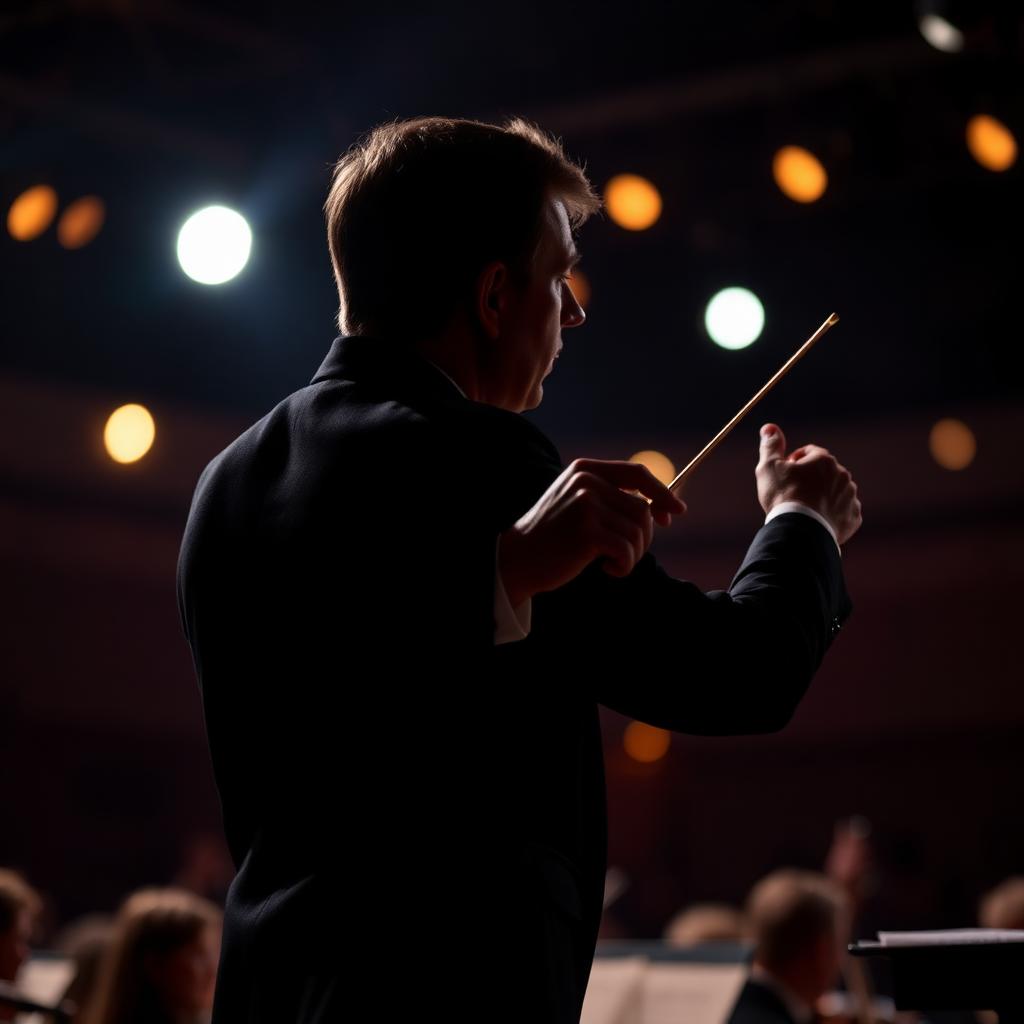
The London Symphony Orchestra (LSO) is the main attraction. Under Chief Conductor Sir Antonio Pappano, the LSO brings a high-octane, virtuosic style that suits the hall’s clarity. Their "Half Six Fix" concerts are a Barbican staple—shorter, introduced programmes starting at 6:30 pm, ideal for those who find a two-hour Mahler symphony daunting or who simply want to get home earlier.
The BBC Symphony Orchestra (BBC SO) and BBC Symphony Chorus provide the adventurous counterpoint. While the LSO often leans into the great Romantic cycles (Tchaikovsky, Bruckner, Sibelius), the BBC SO is where you will likely find UK premieres and experimental programming, such as the works by Hannah Kendall or Per Nørgård appearing in the current season.
For something entirely different, the Academy of Ancient Music brings Baroque and Classical repertoire to the hall. While period instruments have a lower volume than a modern symphony orchestra, the Barbican’s intimacy ensures that a performance like Monteverdi’s L'incoronazione di Poppea still carries to the back of the room.
The Labyrinth: Getting There and Staying Sane
The most common complaint about the Barbican is not the music, but the struggle to find the door. The centre was designed with a "pedway" system—elevated walkways that separate pedestrians from cars.
"The Barbican is a place where you can see your destination from a balcony, but it will take you fifteen minutes and three wrong staircases to actually reach it."
If you are arriving by Tube (Barbican, Moorgate, or St Paul’s), look for the yellow lines painted on the ground. These are literally "follow the yellow brick road" guides that lead you through the concrete tunnels to the main Silk Street entrance. Give yourself an extra 20 minutes for your first visit. You will likely get lost; consider it part of the ritual.
Inside, the facilities are extensive. There are multiple bars on different levels, and the ground floor features a library and a conservatory (open on select days) that offers a lush, tropical contrast to the grey exterior.
Practicalities and Access
- Punctuality: Classical concerts at the Barbican start strictly on time. If you are late, you will usually be held at the doors until a suitable gap in the music—which, in a Bruckner symphony, could be 20-30 minutes away.
- Dress Code: There is none. You will see people in dinner jackets sitting next to students in hoodies. The Barbican is a functional, civic space; wear what makes you comfortable.
- Access: The venue is fully accessible, with lifts serving all levels of the hall. However, because the building is a complex grade-II listed structure, the routes can be circuitous. It is wise to check the venue’s specific access maps on their website if you have mobility requirements.
- Pricing: The Barbican is one of the more egalitarian halls in London. While premium Stalls seats can be expensive, the LSO and BBC SO both offer entry-level pricing. Our diary shows tickets starting as low as £6 for certain events, though £18–£25 is more common for standard orchestral dates.
The Drawbacks
The Barbican is a product of 1970s architectural philosophy, and that brings some friction. The legroom in the Stalls can feel cramped for taller patrons. The air conditioning is occasionally audible during the quietest moments of a performance — the "silent" passages in a Sibelius symphony can sometimes be accompanied by a faint hum.
Furthermore, if you prefer the social "scene" of the Southbank or the historic grandeur of the Wigmore Hall, the Barbican can feel a bit cold. It is a place for the music first, the architecture second, and the socialising a distant third.
How to Book
To see what is currently scheduled — from Tchaikovsky’s Symphony No. 5 to the UK premiere of Dai Fujikura — consult the Bravura diary. We list the full programmes, conductors, and the most accurate current pricing for the LSO and BBC SO seasons. For broader advice on understanding orchestral music or the history of these composers, our guides offer deeper dives into the repertoire.