Shostakovich: the symphonies, the quartets and the double life
Fifteen symphonies written under surveillance — savage, sardonic, and impossible to hear passively.
The Bravura editorial team
Published 7 September 2026 · Last reviewed 7 September 2026 · How we research and review
Dmitri Shostakovich is perhaps the only composer in the Western canon whose music was literally a matter of life and death. Living under the gaze of Stalin’s regime, he spent his nights waiting by the lift in his apartment block, suitcase packed, expecting the secret police to arrive. He was denounced in the state newspaper, Pravda, for writing music that was "chaos instead of melody," only to be rehabilitated years later as a Soviet hero.
This friction — between the public persona of the loyal Soviet citizen and the private reality of a terrified artist — defines his sound. It is music of double meanings, coded messages, and extreme emotional weather. To listen to Shostakovich is to step into a world of biting sarcasm, profound mourning, and physical power.
The Sound of Irony and Agony
If you are coming from the lush, heart-on-sleeve romanticism of Tchaikovsky or Rachmaninov, Shostakovich can feel like a cold shower. His music is rarely "pretty" in a decorative sense. Instead, it is highly rhythmic, often driven by a sense of relentless, mechanical momentum.
He is the master of the "grotesque." You will hear melodies that sound like twisted circus tunes, or marches that start out jaunty but end up sounding like a military invasion. He uses the orchestra as a giant percussion instrument, but he is equally capable of writing long, lonely lines for a single woodwind instrument that feel like a whisper in a dark room.
"A great work of art is a scream of freedom."
For many listeners, the defining characteristic of Shostakovich is the "DSCH" motif. Just as Bach encoded his name into his music, Shostakovich used four notes (D, E-flat, C, B-natural—which in German notation spells D-S-C-H) as a musical signature. When you hear these four notes repeated obsessively in his later works, you are hearing the composer asserting his identity against a system that tried to erase it.
The Entry Points: Where to Start
With fifteen symphonies and fifteen string quartets, the catalogue is daunting. However, several works stand out as perfect introductions for those looking to understand his range.
- Symphony No. 5: This is his most famous work for a reason. Written after he was denounced by the state, it was billed as "a Soviet artist’s creative response to just criticism." It is grand, heroic, and ends with a triumphant march — though many conductors play that finale with a deliberate, hollow plodding that suggests the "triumph" is forced at gunpoint.
- Piano Concerto No. 2: If you want to hear the lighter side of his genius, start here. Written for his son Maxim, it is full of wit, dazzling fingerwork, and a second movement so beautiful it sounds like a film score.
- String Quartet No. 8: This is his most personal chamber work, dedicated "to the victims of fascism and war." It is haunting, quoting many of his own previous works and that signature DSCH motif. It is often performed by full string orchestras (as the Chamber Symphony) for even greater impact.
- Symphony No. 10: Composed shortly after Stalin’s death, this is a sprawling, cinematic journey that features a brutal, short second movement said to be a musical portrait of the dictator himself.
The Public and the Private
To understand Shostakovich, you have to look at the two different tracks of his career: the symphonies and the quartets.
The symphonies were his public statements. These were grand events at the /calendar, requiring massive orchestras and attracting the attention of government censors. Works like the Symphony No. 7 ('Leningrad') became international symbols of resistance during World War II. Because they were so public, they often contain a layer of "official" pomp that the composer may or may not have meant sincerely.
The string quartets, by contrast, were his private diary. In these pieces, he didn't have to worry about impressing a committee or filling a stadium. They are leaner, stranger, and often much darker. If the symphonies are the widescreen cinema of his life, the quartets are the intense, late-night conversations.
Why Hear It Live?
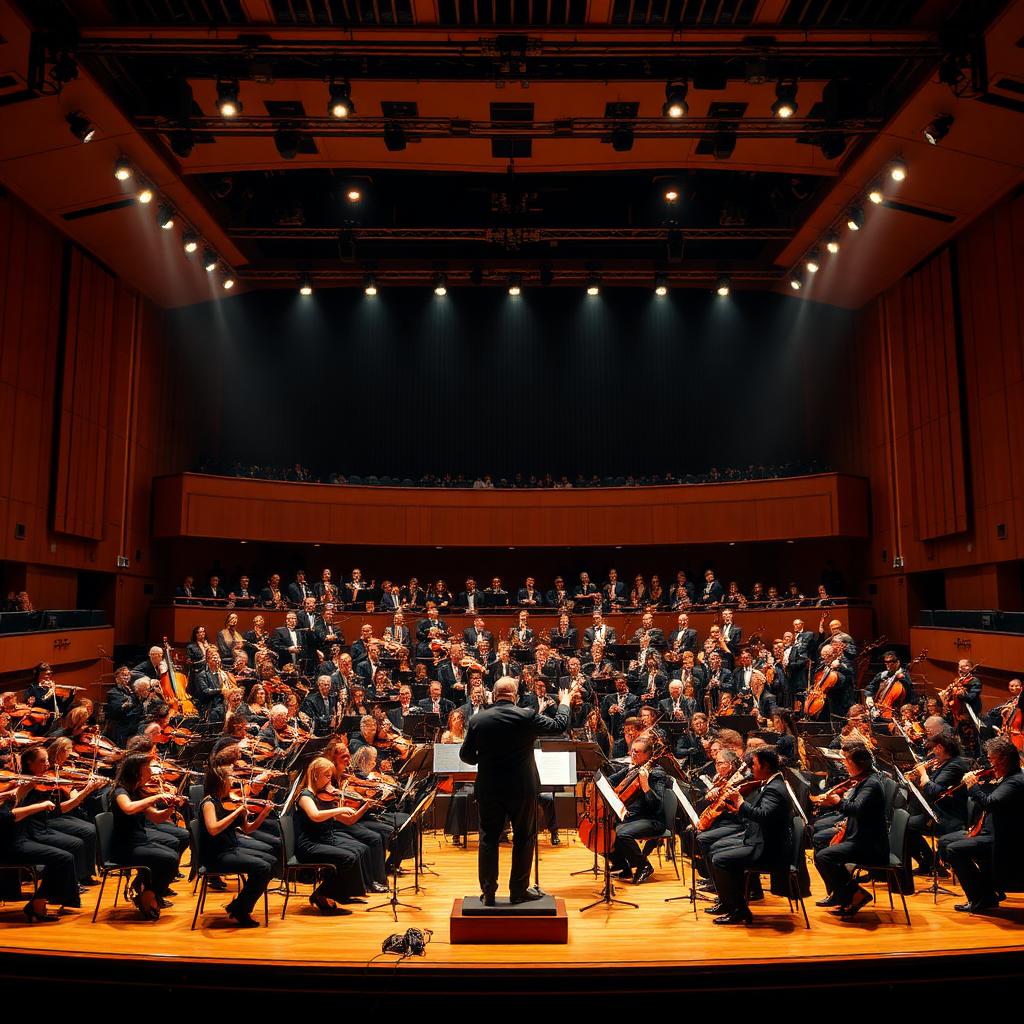
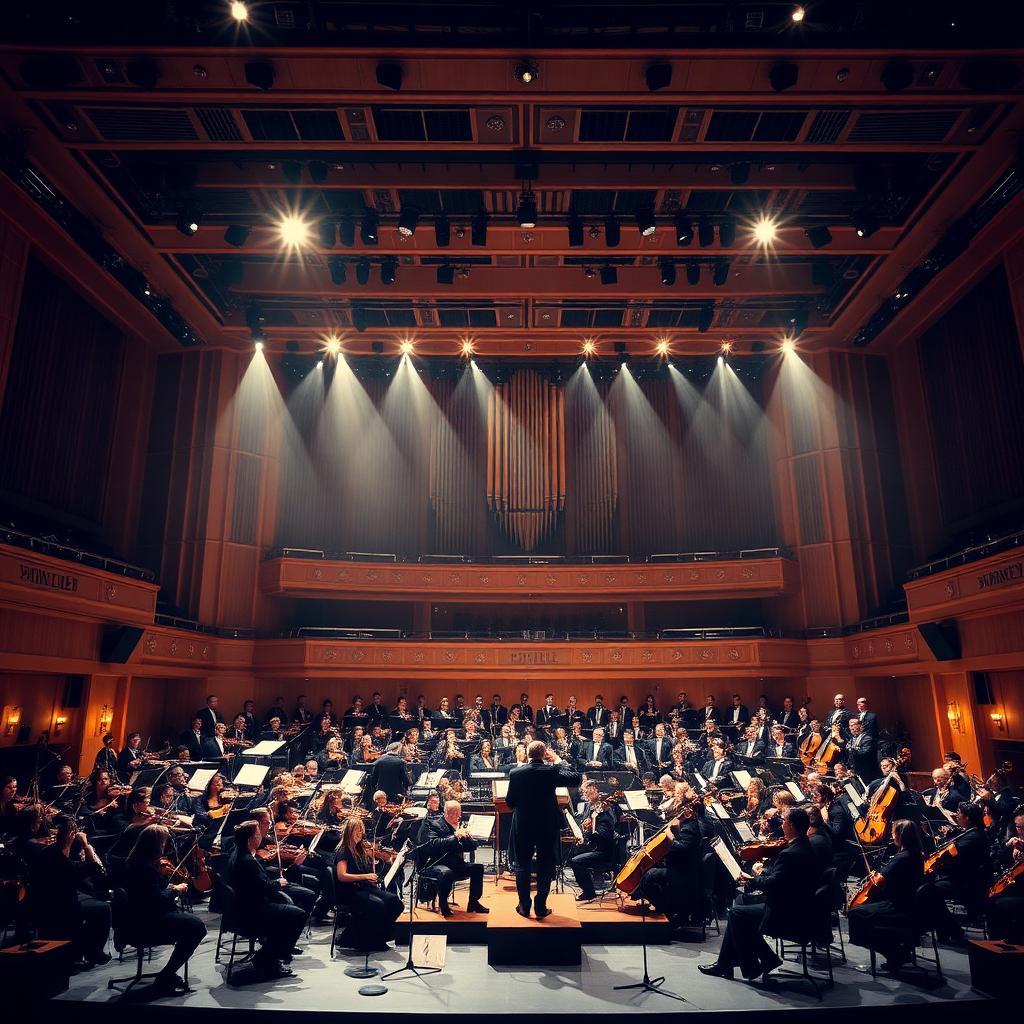
Shostakovich is one of the few composers whose music gains a physical dimension when heard in a concert hall. The sheer volume of his orchestral writing — the wall of sound produced by the brass and percussion — is something a home stereo can rarely replicate.
- The Physicality: In the Leningrad Symphony, the famous "invasion" theme builds slowly and deliberately, repeating over and over for more than ten minutes to deafening roar. In a hall like the Royal Festival Hall or the Symphony Hall, Birmingham, you don't just hear that volume; you feel it in your chest.
- The Silence: Conversely, his quiet moments are incredibly fragile. In a large space, a single flute solo following a massive orchestral climax feels breathtakingly vulnerable.
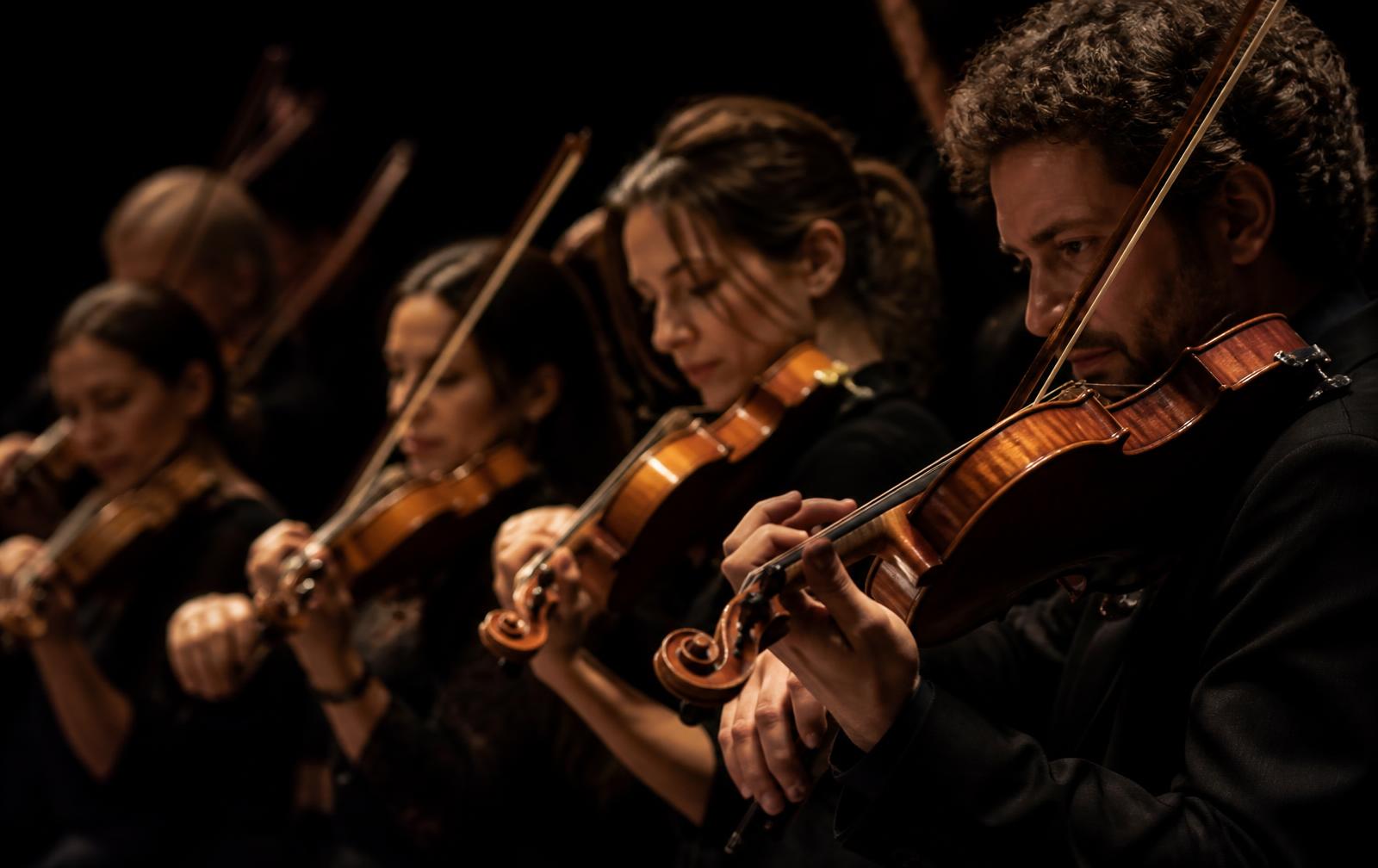
- The Tension: Because so much of this music is about suppressed emotion, there is a palpable tension in the room during a live performance. Watching a violinist dig into a solo in one of the Violin Concertos is a visceral experience of endurance and grit.
Practicalities for the Concertgoer
Shostakovich is a staple of UK orchestral programming. You will frequently find the London Philharmonic Orchestra, the City of Birmingham Symphony Orchestra, and the Royal Scottish National Orchestra featuring his major symphonies in their seasons.
Tickets for these large-scale orchestral concerts typically start around £18, though some venues offer entry-level seating from as little as £6.
If you prefer something more intimate, look for chamber music in smaller spaces. The CBSO Centre in Birmingham or the Music Room in Liverpool offer the kind of close-quarters intensity that suits his string quartets and piano quintets perfectly.
What to Hear First
1. Symphony No. 5: The essential starting point for the symphonic cycle. 2. Piano Concerto No. 2: For those who want something joyful and melodic. 3. String Quartet No. 8: To understand his private, darker world. 4. Festive Overture: A short, five-minute burst of brass and energy often used to open concerts.
What to Save for Later
- Symphony No. 4: A massive, terrifying, and chaotic work that was withdrawn during rehearsals and hidden for decades. It is a masterpiece, but it is "loud" in every sense of the word.
- Symphony No. 14: Actually a song cycle for two singers and strings, themed entirely around death. It is profound but undeniably bleak.
- String Quartet No. 15: His final quartet, consisting of six linked slow movements. It is an exercise in extreme stillness and minimalism.
Searching the Diary
The landscape of Shostakovich performances in the UK is vast, ranging from the cinematic scale of the Symphony No. 11 — frequently performed by the Philharmonia Orchestra — to the intricate chamber works like the Piano Quintet.
Whether you are in London, Manchester, or Edinburgh, his music remains a fixture because it speaks so clearly to the modern age. It is music about surviving under pressure, finding a voice in the noise, and the enduring power of the human spirit.
For a full list of upcoming performances of these symphonies, concertos, and quartets, you can browse the latest listings on the Bravura calendar. To learn more about other composers of the Soviet era, visit our guides page.